
How to Reverse-Engineer Viral Videos With AI
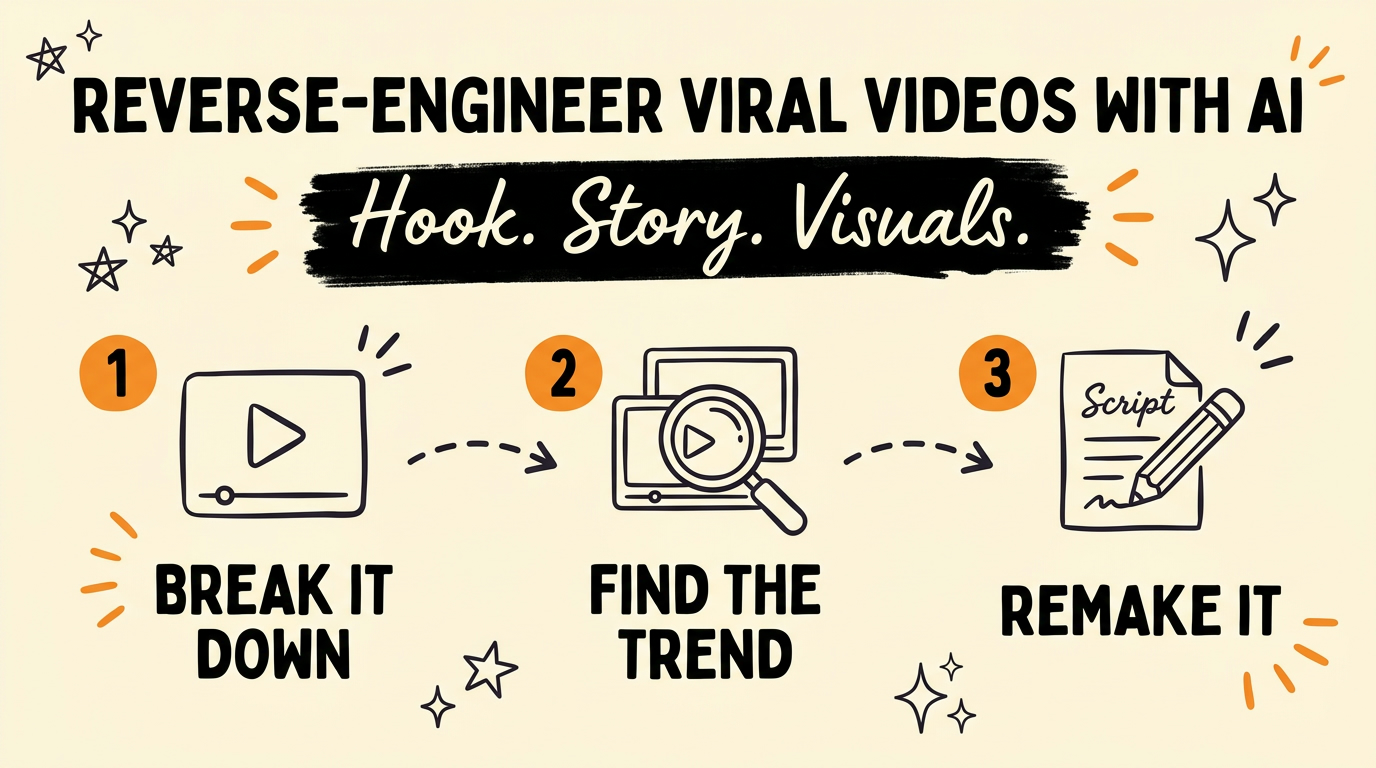
To reverse-engineer a viral video with AI, you don’t need special software. You paste the transcript into Claude, ask it to separate the hook, the storytelling structure, and the visual layout into their own buckets, then repeat that same breakdown across a handful of videos in your niche until a pattern shows up. The pattern is the part worth copying, not the video itself.
Get the Free Guide
Grab the full breakdown system: the exact prompts, the setup, and the fix table for when Claude gives you a generic answer instead of a real one.
Get the free Viral Video Breakdown System →
Most creators watch a viral video three or four times, feel like they understand it, and then make something that doesn’t work nearly as well. The gap is that watching a video and breaking it down are two different skills, and AI is much better at the second one than most people expect.
What Does an AI Video Research Tool Actually Do?
An AI video research tool takes a single video and splits it into parts you can study and copy separately: the hook, the storytelling structure, and the visual layout. That’s the job Niche Pulse does inside Growth OS, the AI system I built with fifteen integrated tools for creators. You drop in a video link, and instead of a vague “this did well” summary, you get the actual mechanics.
You can do a rough version of this yourself with Claude and a transcript, which is what the guide below walks through. The table shows what each part of the breakdown is actually for.
| Breakdown part | What it tells you | What you do with it |
|---|---|---|
| Hook | The first 1-3 seconds that earns the next second of watch time | Swap your own topic into the same opening structure |
| Storytelling | The order ideas are introduced, the tension, the payoff | Reuse the sequence, not the words |
| Visual layout | What’s on screen when, text timing, cuts | Match the pacing in your own edit |
How Do You Spot Trends Across Multiple Videos?
You spot a real trend by running the same breakdown on three to five videos in your niche and comparing the results side by side, not by watching one video and guessing. One video tells you what one creator did. Five videos in the same category, broken down the same way, tell you what the format actually rewards.
This is the part that’s easy to skip because it’s slower than analyzing one video, but it’s also the part that turns a hunch into something you can act on with confidence. Growth OS runs several video breakdowns together and surfaces the overlap automatically, with a visual report showing what to make next. If you’re doing it manually in Claude, you’re doing the same comparison, just one conversation at a time.
How Do You Remake a High-Performing Video Without Copying It?
You remake a high-performing video by keeping its structure and replacing its content, which is different from copying it and different from being “inspired by” it in a way that doesn’t actually transfer anything useful. The hook pattern, the beat order, and the pacing are reusable. The specific topic, footage, and wording are not.
Once you have the breakdown from the section above, the remake step is mechanical:
- Take the hook pattern and write three versions of it using your own topic
- Map your own story or point onto the same beat order as the original
- Match the pacing (when text appears, when the cut happens) rather than the exact visuals
FAQ
Do I need Growth OS to reverse-engineer a video with AI?
No. You can get a usable breakdown by pasting a video’s transcript into Claude and asking it to separate the hook, the storytelling structure, and the visual layout. Growth OS and its Niche Pulse tool automate that process and run it across multiple videos at once, but the core technique works in any chat-based AI tool.
How many videos do I need to compare before I trust a trend?
Three to five videos in the same niche, broken down with the same categories each time. One video shows you a choice one creator made. Several videos, compared side by side, show you what the format is actually rewarding right now.
What’s the difference between remaking a video and copying it?
Remaking a video means reusing its structure (the hook pattern, the order of ideas, the pacing) with your own topic and words. Copying means reusing the specific wording or footage. Platforms and audiences both respond differently to the two, and only the first one holds up over time.
Can Claude actually analyze a video directly?
Claude can’t watch a video file, so you give it the transcript and a written description of the visual layout (or use a tool like Niche Pulse that extracts both automatically). Claude is accurate at breaking down text it’s actually given and unreliable if you ask it to guess at visuals it hasn’t seen.
Make the System Do the Watching for You
Reverse-engineering viral videos is a research habit, not a one-time trick: pull the transcript, separate the hook from the story from the visuals, repeat across a handful of videos in your niche, then remake the pattern with your own content. The free guide below has the exact prompts and a fix table for the parts that commonly go wrong.
If you want the full build, including how Niche Pulse and the other fourteen Growth OS systems fit together, Vibe Coding Mastery walks through the whole thing.
For more on turning one piece of content into several, see Repurpose One Video Into Three Assets in Two Minutes, Grow a Niche Service Account to 100K With AI Research, and Why Your Engagement Rate Is Your Best Content Playbook.